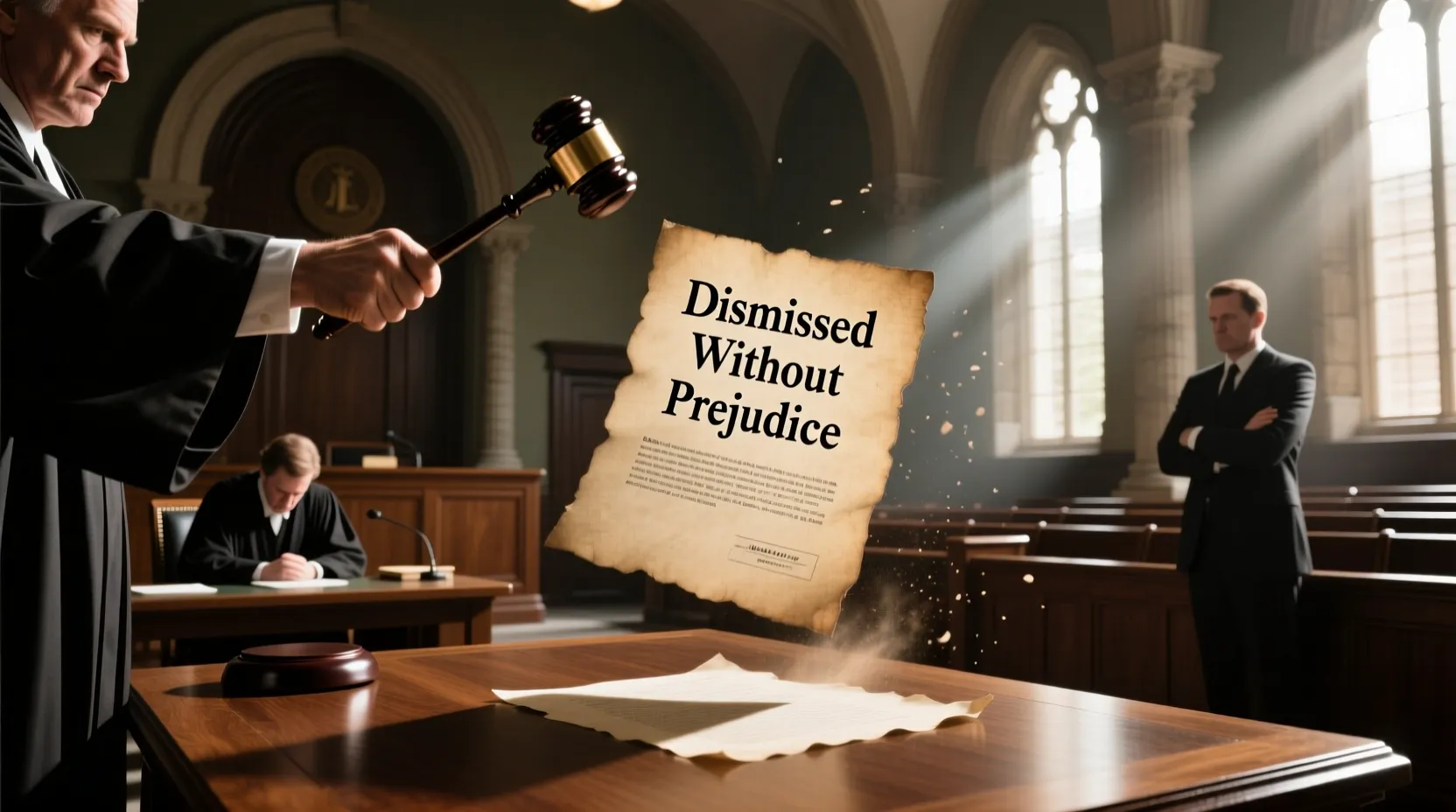
Scrolling through a legal forum the other day, I stumbled upon the phrase “dismissed without prejudice” and felt instantly lost.
At first, I wondered if it was some kind of insult or legal slang meant to confuse people.
After digging a little, I realized it’s actually a formal term often used in law and court cases but understanding it can make a huge difference if you ever encounter it in texts, emails, or legal discussions.
Quick Answer: Dismissed without prejudice means a case is closed but can be refiled later.
It’s a formal way of saying the matter isn’t permanently resolved and can be brought up again.
What Does Dismissed Without Prejudice Mean in Text?
The term dismissed without prejudice is used mostly in legal or formal contexts. In simple words, it means the case or claim has been closed, but the person has the right to bring it back in the future.
Example:
“The judge dismissed the case without prejudice, so the plaintiff can file again if needed.”
In short: Dismissed Without Prejudice = Case closed but can be refiled = Not permanently rejected.
Where Is Dismissed Without Prejudice Commonly Used?
This phrase is not typically casual slang — it’s more formal, but you might see it in:
- ⚖️ Legal documents and court filings
- 📝 Emails between lawyers or legal teams
- 💼 Professional discussions about lawsuits or complaints
- 📱 Occasionally in social media posts referencing legal news or updates
Tone: Formal and professional, not casual or flirty.
Examples of Dismissed Without Prejudice in Conversation
Here are some realistic examples of how someone might use this phrase in text or online discussions:
A: “Did the court make a decision yet?”
B: “Yeah, it was dismissed without prejudice. They can file again later.”
A: “So is this case over for good?”
B: “Not really, it’s dismissed without prejudice, so it’s technically still open.”
A: “I saw your post about the lawsuit 😬”
B: “It got dismissed without prejudice, thankfully.”
A: “Can they sue again?”
B: “Yes, because it was dismissed without prejudice.”
A: “Why not just dismiss it completely?”
B: “Dismissed with prejudice would do that, but ours was without prejudice.”
When to Use and When Not to Use Dismissed Without Prejudice
✅ When to Use
- Discussing legal updates
- Explaining court decisions formally
- Professional emails regarding claims or cases
- Legal blog posts or articles
❌ When Not to Use
- Casual texting with friends
- Social media posts without context
- Urgent or emotional personal matters
- Informal conversations about unrelated topics
| Context | Example Phrase | Why It Works |
|---|---|---|
| Friend Chat | “The case is dismissed without prejudice” | Too formal, might confuse |
| Work Chat | “The claim was dismissed without prejudice; can be refiled” | Professional & clear |
| “The complaint was dismissed without prejudice, allowing refiling if necessary” | Formal, precise, and professional |
Similar Slang Words or Alternatives
| Phrase | Meaning | When to Use |
|---|---|---|
| Dismissed with prejudice | Case closed permanently, cannot be refiled | Legal, formal |
| Refile possible | Can submit again later | Informal/legal context |
| Case closed | Ended without specifics about refiling | Professional, formal |
| Dropped without consequence | No permanent effect, can try again | Informal/legal |
| Pending review | Still under consideration, not final | Professional, legal documents |
FAQs About Dismissed Without Prejudice
What’s the difference between dismissed with and without prejudice?
Dismissed with prejudice = permanently closed. Dismissed without prejudice = can be refiled.
Can anyone use this phrase casually?
It’s mainly formal and legal. Using it casually might confuse people.
Is it positive or negative?
Neutral. It doesn’t favor either side but indicates the matter isn’t permanently closed.
Does it mean the case is weak?
Not necessarily. It only means the case can be refiled; it doesn’t judge strength or merit.
✨ Conclusion
Dismissed without prejudice is a formal legal term meaning a case is closed but can be refiled later.
While it’s rarely used in casual texting, understanding it can help you follow legal updates, emails, or professional discussions accurately.
Remember, it’s formal, neutral, and professional, not slang for everyday conversations.

Justin Taylor is a puzzle enthusiast and connoisseur, dedicated to exploring the fascinating world of puzzles. With a knack for solving complex riddles and a deep understanding of puzzle mechanics, Justin’s contributions to Puzzlerpedia are both enlightening and entertaining, captivating readers of all skill levels.